Shopping in German Einkaufen – useful sentences for the supermarket and shops
Shopping is one of the first places where you will use your German. You don’t need to say much; a few phrases and quantity words are enough. This page also covers a system you may not know from home: the bottle deposit. I have given it its own section below.
First come quantities, then the questions you will hear at the checkout. There is a separate section for clothes shops, because that is where words for sizes and changing rooms come in.
Saying how much
In German nothing comes between the quantity and the product: where English says ‘a kilo of apples’, German simply puts the two side by side.
| German | English |
|---|---|
| ein Kilo Äpfel | a kilo of apples |
| ein halbes Kilo Tomaten | half a kilo of tomatoes |
| hundert Gramm Käse | a hundred grams of cheese |
| ein Liter Milch | a litre of milk |
| eine Flasche Wasser | a bottle of water |
| eine Packung Reis | a packet of rice |
| eine Dose Tomaten | a tin of tomatoes |
| ein Stück Kuchen | a piece of cake |
| eine Scheibe Brot | a slice of bread |
| ein Becher Joghurt | a pot of yoghurt |
| eine Tüte Chips | a bag of crisps |
| ein Bund Petersilie | a bunch of parsley |
✅ The plural after numbers
Masculine and neuter units of measurement do not take a plural: zwei Kilo, drei Liter, fünf Stück.
Feminine units do take the plural: zwei Flaschen, drei Dosen, vier Packungen.
In the supermarket
Answer: Im Kühlregal, Gang drei.
For the total: Wie viel macht das zusammen?
This is the most natural phrase at the counter.
If it has sold out, you will hear: Das ist leider aus.
At the checkout
| Cashier | English |
|---|---|
| Haben Sie eine Payback-Karte? | Do you have a loyalty card? |
| Zahlen Sie bar oder mit Karte? | Cash or card? |
| Brauchen Sie eine Tüte? | Do you need a bag? |
| Das macht zwölf Euro fünfzig. | That comes to twelve euros fifty. |
| Haben Sie es passend? | Do you have the exact money? |
| Möchten Sie den Kassenbon? | Would you like the receipt? |
| Bitte am Kartenlesegerät bestätigen. | Please confirm on the card reader. |
⚠️ Pfand – the bottle deposit
In Germany a Pfand (deposit) is added to the price of plastic and glass bottles. When you take the bottle back to the supermarket, you get this money back.
Einwegpfand 0,25 € · Mehrwegpfand 0,08 € bis 0,15 €
The return machine is called der Pfandautomat; it gives you a slip, which you show at the checkout.
If you throw the bottles away, you throw money away too. Over a weekly shop it is not a small amount.
In a clothes shop
| German | English |
|---|---|
| Ich suche eine Jacke. | I’m looking for a jacket. |
| Welche Größe haben Sie? | What size are you? |
| Kann ich das anprobieren? | Can I try this on? |
| Wo ist die Umkleidekabine? | Where is the changing room? |
| Das ist mir zu klein. | It’s too small for me. |
| Haben Sie das eine Nummer größer? | Do you have this one size bigger? |
| Das nehme ich. | I’ll take it. |
| Kann ich das umtauschen? | Can I exchange this? |
| Ist das reduziert? | Is this reduced? |
🛒 Picture vocabulary: in the supermarket and in shops
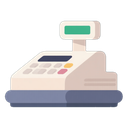 die Kassedie Kassentill, checkout
Common pitfalls
1. ‘Ich will’ sounds rude
If you translate ‘I want …’ directly as Ich will, it sounds like a blunt demand.
❌ Ich will ein Brot. → ✅ Ich hätte gern ein Brot. / ✅ Ich möchte ein Brot.
In Germany the polite form is not optional; it is expected. hätte gern is the safest phrase.
2. Reading the comma in prices
German uses a comma where English uses a decimal point, and in prices you don’t say ‘Komma’ – you read the amount as euros and cents.
3,49 € Drei Euro neunundvierzig
To understand the amount at the checkout, you need to recognise numbers quickly; the lesson on numbers will help.
3. Bags cost money – bring your own
A Tüte (bag) costs money, and many supermarkets now sell cloth bags (der Jutebeutel) instead.
Nein danke, ich habe eine Tasche.
4. Supermarkets are closed on Sundays
In Germany supermarkets do not open on Sundays. Shops at large railway stations and airports are among the exceptions.
So you need to finish your shopping before closing time on Saturday; in the first few months this is what surprises people most.
Test yourself
Fill in the gaps in your head, then open the answer.
Ich ___ gern ein Kilo Äpfel. · Zahlen Sie bar ___ mit Karte? · Ich möchte zwei ___ Wasser. (bottle) · Das ist ___ zu klein. (for me)
hätte (Ich hätte gern = polite request) · oder (bar oder mit Karte) · Flaschen (feminine unit → plural) · mir (zu klein sein → Dativ: too small for me)
If you wrote Flasche in the third sentence: masculine and neuter units stay singular, but feminine ones take the plural.
Keep learning
Practise shopping in German now
💬 Paying by card and banking: At the bank: account, card, transfer →
💬 Quantities and prices in the supermarket: Units of measurement and prices: zwei Kilo, zwei Flaschen →