
The weather in German Weather words with pictures: rain and snow, temperature, sky and wind; seasons, months, compass points and phrases
The German for weather is das Wetter, and weather is usually expressed with es: Es regnet. (It's raining.) Es schneit. (It's snowing.) Es ist kalt. (It's cold.) This es is an impersonal subject, just like “it” in “it's raining”. To ask what the weather is like: Wie ist das Wetter heute?
First come the weather words on picture cards; click a card to hear the German pronunciation. After that you will find expressions for rain and snow, temperature, the sky and wind, the seasons, the months, the points of the compass and sentences for talking about the weather.
Weather words
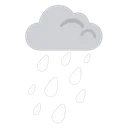 der Hagelno pluralhail
Rain, snow and hail – Niederschlag
| German | English |
|---|---|
| es regnet | it's raining |
| es schneit | it's snowing |
| es hagelt | it's hailing |
| es ist neblig | it's foggy |
| es donnert | it's thundering |
| es blitzt | there's lightning |
Weather usually takes es
Es regnet. · Es schneit. · Es ist warm. · Es ist windig.
The verbs for rain, snow and hail (regnen, schneien, hageln) are only used with es. For temperature and the sky, use es ist + adjective.
Temperature – Temperatur
| German | English |
|---|---|
| heiß | hot |
| warm | warm |
| mild | mild |
| kühl | cool |
| kalt | cold |
| eisig | icy, freezing |
| schwül | humid, muggy |
How do you give the temperature?
Es sind 15 Grad. · Die Temperatur ist 25 Grad. · Es sind minus 5 Grad.
Temperatures are usually given with es sind … Grad; after a number, Grad stays in the singular.
The sky – Himmel
| German | English |
|---|---|
| sonnig | sunny |
| wolkenlos | cloudless |
| klar | clear |
| heiter | fair, mostly sunny |
| wolkig | cloudy |
| leicht bewölkt | slightly cloudy |
| stark bewölkt | very cloudy |
| bedeckt | overcast |
Wind
| German | English |
|---|---|
| windstill | still, no wind |
| windig | windy |
| leichter Wind | light wind |
| starker Wind | strong wind |
| stürmisch | stormy |
Seasons (die Jahreszeiten) and months
| German | Months | English |
|---|---|---|
| der Frühling | März · April · Mai | spring |
| der Sommer | Juni · Juli · August | summer |
| der Herbst | September · Oktober · November | autumn |
| der Winter | Dezember · Januar · Februar | winter |
im before seasons and months
im Sommer · im Januar · im Frühling
All seasons and months are masculine (der Januar, der Februar), and in dem contracts to im. Days, months and how to pronounce them: days, months and seasons in German.
Months
| German | English |
|---|---|
| der Januar | January |
| der Februar | February |
| der März | March |
| der April | April |
| der Mai | May |
| der Juni | June |
| der Juli | July |
| der August | August |
| der September | September |
| der Oktober | October |
| der November | November |
| der Dezember | December |
Compass points – die Himmelsrichtungen
| German | English |
|---|---|
| der Norden | north |
| der Süden | south |
| der Osten | east |
| der Westen | west |
| der Nordosten | north-east |
| der Nordwesten | north-west |
| der Südosten | south-east |
| der Südwesten | south-west |
The direction of the wind is given with aus: Der Wind kommt aus Norden. (The wind is blowing from the north.)
Talking about the weather
| Example sentence | Meaning |
|---|---|
| Wie ist das Wetter heute? | What's the weather like today? |
| Es ist sonnig und warm. Die Temperatur ist 25 Grad. | It's sunny and warm. The temperature is 25 degrees. |
| Heute ist es bewölkt und es regnet. | It's cloudy and raining today. |
| Im Winter schneit es oft in den Bergen. | In winter it often snows in the mountains. |
| Welche Jahreszeit magst du am liebsten? Ich mag den Frühling. | Which season do you like best? I like spring. |
| Im August fahre ich ans Meer. | In August I go to the seaside. |
| Morgen soll es regnen. | It's supposed to rain tomorrow. |
Test yourself
What is the German for “It's snowing”?
Es schneit.
Fill in the gap: ____ ist kalt. (It's cold.)
Es. Sentences like “es ist kalt” take es.
Which article? ____ Wolke
die. Plural: die Wolken.
Fill in the gap: ____ Sommer ist es heiß.
Im. Seasons take im.
What is the German for “rainbow”?
der Regenbogen.
Frequently asked questions
How do you talk about the weather in German?
In German, weather is expressed with es: Es regnet (it's raining), Es schneit (it's snowing), Es ist sonnig (it's sunny), Es ist kalt (it's cold). To ask what the weather is like, say Wie ist das Wetter heute?
What are the most common German weather words?
The most common weather words are die Sonne (sun), die Wolke (cloud), der Regen (rain), der Schnee (snow), der Wind (wind), der Nebel (fog), das Gewitter (thunderstorm) and der Regenbogen (rainbow).
How do you say the temperature in German?
Use Es sind 15 Grad or Die Temperatur ist 15 Grad. Below zero, use minus: Es sind minus 5 Grad.
What are the seasons in German?
The seasons in German are der Frühling (spring), der Sommer (summer), der Herbst (autumn) and der Winter (winter). They take im: im Sommer.
Keep learning
CONTINUE HERE
A weather tradition